CN
CN EN
EN
 es
es Dec 22, 2025


Stock Code: SH600704
What are you looking for?
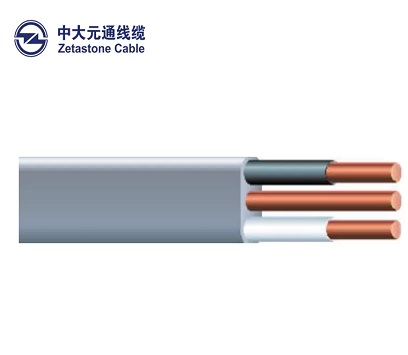
NMD90 stands for Non-Metallic Dry or damp locations, rated for 90°C. It can be shaped in both in flat and round, non-metallic sheathed building wire approved for use in Canada (CSA certified). It’s commonly used for permanent indoor wiring in residential, commercial, and institutional buildings, such as branch circuit wiring for outlets, switches, and lighting. Its key features include a thermoplastic nylon outer jacket and color-coded conductors for easy identification.
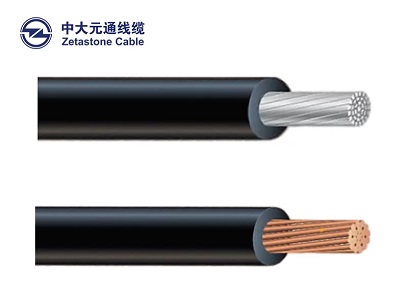
RW90 designates a single conductor wire with XLPE insulation, rated for both dry and wet locations at 90°C. RW90 conductors are widely used in industrial and utility applications where exposure to moisture, oils, or sunlight is expected. Common uses include machine tool wiring, control panels, and outdoor installations in conduit. The “W” (wet) rating is crucial for durability in harsh environments.
CSA wire refers to electrical wire and cable that has been tested and certified by the Canadian Standards Association (CSA). This certification is critically important because it is a legal requirement for electrical products installed in Canada and is widely recognized in the USA as evidence of safety and compliance with North American standards (like CSA C22.2). It ensures the product meets rigorous safety, performance, and construction benchmarks.
Choosing the right CSA cable involves assessing: Application environment (dry, damp, wet, corrosive), Voltage rating (e.g., 600V), Temperature rating (e.g., 90°C), Conductor size (AWG) based on ampacity, Insulation/jacket material (e.g., PVC,XL,EP,CPE), and specific codes or standards (NEC, CEC) the project must follow. Our technical team can guide you based on your project specifications.
RPVU cable (often denoting XLPE Insulated, single conductor and multi-conductor Photovoltaic Cable) is suitable for fixed installations in control circuits, instrumentation, and automation systems in industrial plants, factories, and machinery where mechanical protection is provided by conduit or trays.
You should engage a specialized screen cable manufacturer when your application involves sensitive signals, high-frequency data transmission, or environments with electromagnetic interference (EMI). Screened (shielded) cables are essential for industrial Ethernet (CAT6A), servo motor feedback, audio/video, and instrumentation to prevent signal degradation, noise, and data errors. A good manufacturer can advise on foil vs. braid shields and proper grounding.
While NMD90 is a Canadian (CSA) designation, cables with identical construction and performance may be sold in the USA under different listings (such as NM-B, Type NM cable per NEC Article 334). For US projects, it is essential to verify the cable carries the appropriate UL listing or CSA US marking to ensure compliance with the National Electrical Code (NEC).
Typically, no. While RW90 conductors are rated for wet locations, direct burial usually requires a cable specifically designed for that purpose, with additional mechanical protection (like a metallic armour or a robust direct burial jacket, e.g., USE or UF cable). RW90 conductors must be installed within a raceway (conduit) when used underground for protection.
Both CSA (Canada) and UL (USA) are nationally recognized testing laboratories (NRTLs). CSA certification is the primary mark for Canada, while UL Listing is the primary mark for the USA. Many products (including ours) are dual-certified (CSA and cULus or cUL). The key difference is the jurisdiction of acceptance, but the safety standards are largely harmonized. Always specify the mark required for your project’s location.
In factory automation, RPVU cable offers: Excellent flexibility for routing in control panels and cable carriers, good chemical resistance against common industrial coolants and oils, color-coded conductors for easy circuit tracing, and a balanced cost-to-performance ratio. It is a reliable workhorse for connecting PLCs, sensors, and actuators.
As a professional screen cable manufacturer, we produce a range including: Individual Pair Screened (IPS) & Overall Screened (OAS) control cables, Screened Instrumentation Cables, Screened Data Cables (Cat5e/6/6A), and Coaxial Cables. These are designed for analog signals (4-20mA), digital data (PROFIBUS, Ethernet), video, and high-frequency RF signals, all requiring EMI protection.
Both NMD90 cable and RW90 conductors have a maximum continuous conductor operating temperature of 90°C (194°F). This rating refers to the temperature the conductor itself can withstand without degrading the insulation. Ambient temperature and bundling factors will affect the actual current-carrying capacity (ampacity).
Yes, we offer full customization services on our CSA cable products. This includes pre-cutting to your exact lengths, custom printing of meter markings or unique identifiers on the jacket, and specialized packaging (reels, coils, boxes) for large projects or distribution. This reduces waste and installation time on-site.
The screening (or shielding) in a cable is typically a metallic layer (aluminum foil, copper braid, or combination) surrounding the insulated conductors. It works as a Faraday cage, capturing and diverting external electromagnetic interference (EMI) to ground before it can induce noise on the internal signal wires. Proper termination of the shield to ground is critical for its effectiveness.
Our RPVU and screened cables are critical components in industries such as: Industrial Automation & Manufacturing, Oil & Gas (upstream and downstream), Water/Wastewater Treatment, Mining, Power Generation & Distribution, and Transportation Systems. These sectors rely on robust, reliable signal and control integrity in electrically noisy and physically demanding environments.