CN
CN EN
EN
 es
es 
Aug 10, 2026


Stock Code: SH600704
What are you looking for?
Bare conductor cables are the backbone of modern power transmission and distribution systems. These uninsulated cables, primarily made of aluminum or copper, are engineered to efficiently carry electrical current over long distances, making them essential for overhead power lines, substations, and grounding systems. In this comprehensive guide, we'll explore what bare conductor cables are, their types, applications, and why they're a cost-effective choice for power infrastructure. Let's dive in to help you understand how these cables can meet your project needs and boost your operational efficiency.
Bare conductors are electrical cables without an insulating layer, typically made from copper or aluminum. Their exposed design allows for efficient electricity transmission, reduced weight, and lower costs compared to insulated cables. Bare conductors are widely used in environments where insulation is unnecessary, such as overhead power lines and grounding systems.
Bare conductor cables transmit electrical current through highly conductive materials. The absence of insulation facilitates heat dissipation, which is critical for high-current applications. However, their exposed nature requires careful installation to prevent electrical hazards like short circuits or accidental contact.
High Conductivity: Copper and aluminum ensure efficient power flow with minimal energy loss.
Durability: Designed to withstand harsh environmental conditions like wind, rain, and extreme temperatures.
Cost-Effective: No insulation reduces manufacturing and material costs.
Easy Installation: Lightweight and flexible, simplifying setup in overhead applications.
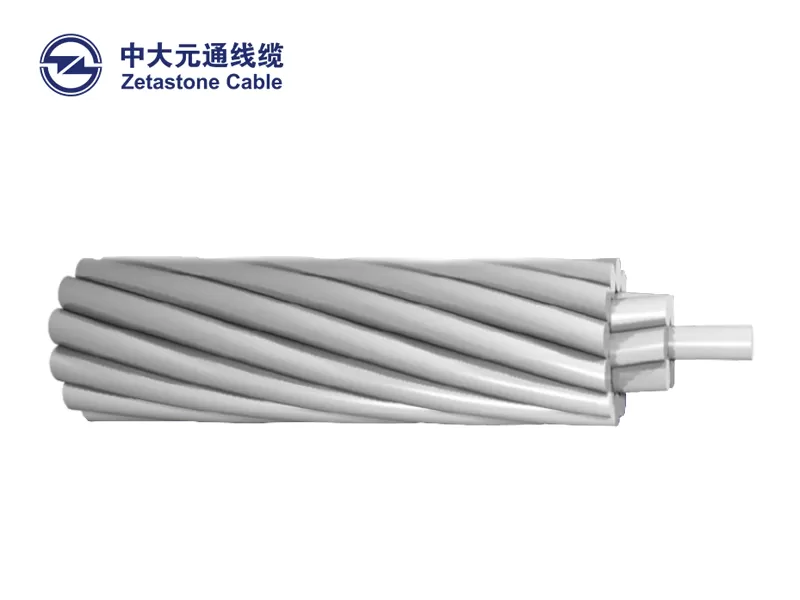
Bare conductors are categorized by material, structure, and function. Below are the primary types and their applications:
| Type | Material | Structure | Key Features | Applications |
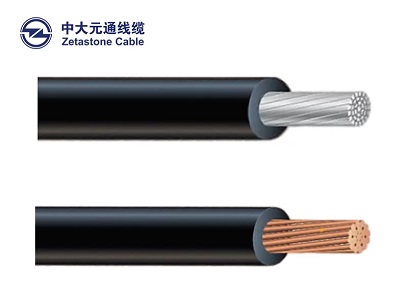
| AAC (All Aluminum Conductor) | Aluminum | Multiple aluminum strands twisted together | Lightweight, corrosion-resistant, cost-effective, good conductivity | Urban overhead power lines, medium-length transmission |
| ACSR (Aluminum Conductor Steel Reinforced) | Aluminum with steel core | Aluminum strands wrapped around a central steel core | High tensile strength, durable for long spans, excellent for heavy loads | Long-span overhead transmission lines, challenging terrains |
| AAAC (All Aluminum Alloy Conductor) | Aluminum alloy | Multiple aluminum alloy strands twisted together | Enhanced corrosion resistance, lightweight, high strength-to-weight ratio | Coastal or high-corrosion areas, overhead power lines |
| Bare Copper Conductor | Copper | Single or multiple copper strands twisted together | Superior conductivity, easy to solder, high durability | Grounding systems, substations, busbars |
| BAG (Bare Armored Grounding Wire) | Copper with steel armor | Copper conductor encased in a protective steel armor | Mechanical protection, corrosion resistance, high durability | Grounding in harsh environments, industrial facilities |
Bare conductors can be classified based on their materials, functionality, and adherence to industry standards.
Copper: Offers high conductivity and durability but is heavier and more expensive. Ideal for grounding systems and substations where superior conductivity is critical.
Aluminum: Lighter and more cost-effective, though slightly less conductive than copper. Commonly used in overhead power lines for its weight advantage.
Overhead Transmission Lines: Designed to transmit electricity over long distances, supporting urban and rural power grids.
Grounding Wires: Provide a safe path for fault currents in electrical systems, ensuring safety.
Busbars: Conduct electrical current within substations and industrial facilities for efficient power distribution.
IEC Standards: International Electrotechnical Commission standards ensure global compatibility and reliability.
IEEE Standards: Institute of Electrical and Electronics Engineers standards, widely adopted in the US for consistent performance.
EN Standards: European standards for electrical conductors, ensuring compliance in EU markets.
Cost Savings: No insulation reduces production costs, making them economical for large-scale projects.
Efficient Heat Dissipation: Ideal for high-current applications where heat management is essential.
Lightweight Design: Bare overhead conductors simplifies installation, especially for overhead lines.
Global Standards Compliance: Meets IEC, IEEE, and EN standards for worldwide use.
Corrosion Risk: Susceptible to environmental factors like moisture or salt.
Solution: Nano-coatings enhance corrosion resistance.
Safety Concerns: Exposed wires require careful handling to avoid shocks.
Solution: Adherence to strict safety protocols during installation.
Limited Applications: Not suitable for environments requiring insulation.
Solution: Use covered conductors where insulation is needed.
The production of bare conductors involves precise steps to ensure quality and performance.
Material Selection: Choosing high-quality aluminum or copper for optimal conductivity.
Wire Drawing: Reducing the diameter of metal rods through a series of dies to achieve the desired size.
Stranding: Twisting multiple wires together to form a robust conductor.
Annealing: Heating and cooling the conductor to improve ductility and conductivity.
Tensile Strength Test: Ensures the cable can withstand mechanical stresses.
Conductivity Test: Measures electrical conductivity to confirm efficient power transmission.
Corrosion Resistance Test: Evaluates durability in harsh environments.
Visual Inspection: Checks for physical defects and ensures proper stranding.
Zhejiang Zetastone Wire & Cable Co., Ltd., a subsidiary of the Fortune 500 Wuchan Zhongda Group (stock code: SH600704), is a leading manufacturer of bare conductors. Founded in 2000 with a registered capital of RMB 800 million, Zetastone Cable operates Asia's largest intelligent production workshop for special cables. With over 300 patents, including 32 invention patents, our bare conductors (AAC, ACSR, AAAC) are certified by UL, CSA, IEC, IEEE, EN, and eight major global classification societies.
Zetastone's products power major projects like the G20 Hangzhou Summit and 15 sub-provincial city subway systems. Exported to America, Asia, and Africa, our conductors are trusted by global enterprises and supported by research collaborations with top universities.
Bare conductor cables are a reliable, cost-effective solution for power transmission and distribution. Their versatility, durability, and efficiency make them a top choice for utilities and infrastructure projects worldwide. By selecting the right type—AAC, ACSR, or AAAC—you can optimize performance for your specific needs, whether it's long-distance transmission or grounding applications. Whether you're building overhead power lines, grounding systems, or major infrastructure projects, Zetastone is your trusted partner.

With 15 years in cable manufacturing, Michael specializes in conductor material science and high-voltage applications. He has led development projects for China's ultra-high-voltage transmission network and holds three patents in conductor alloy technology. Before joining Zetastone, Michael worked with State Grid Corporation on nationwide grid upgrades.